
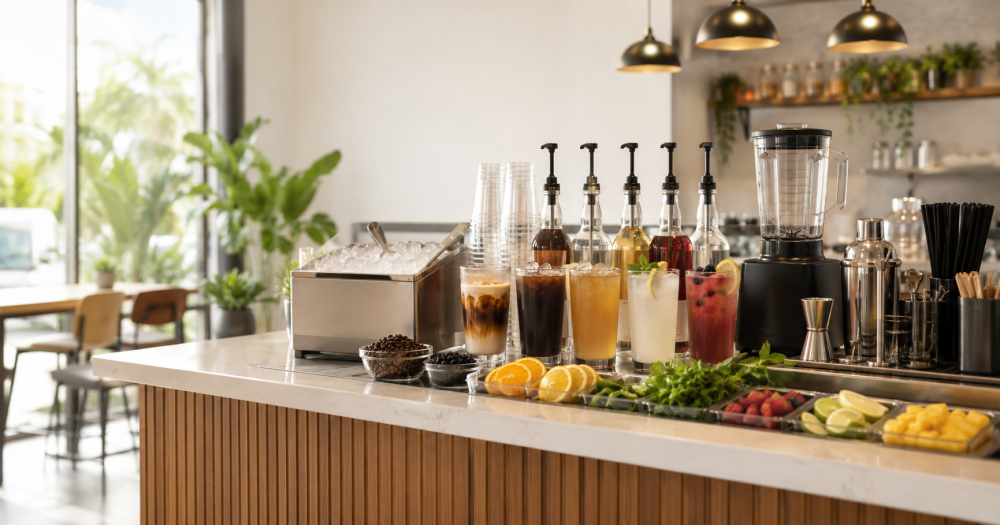
The café might have the finest coffee and the most delicious syrups, yet orders are delayed, ice melts before serving, and the barista shuttles back and forth between the refrigerator, blender, and cup area multiple times to prepare a single drink. The problem isn't the quality of the ingredients, but rather the way the cold drink bar is set up.
A successful bar isn't measured by the number of machines it has, but by its ability to convert an order into a consistently high-quality beverage quickly and with minimal effort and waste. Every detail, from the placement of the ice machine to the arrangement of the syrup bottles, affects the speed of operation, the customer experience, and the cost per cup.
With the huge demand for iced coffee, frappes, smoothies, cold matcha, mojitos and refreshing drinks in Saudi Arabia, setting up a cold drinks bar in a cafe has become an essential step that is no less important than choosing an espresso machine or designing a coffee menu.
This guide outlines how to plan a bar, the necessary equipment, how to arrange the components, and the most important operating standards that will help you build a functional station that serves the staff and supports cafe sales.
What is meant by a cold drinks bar in a cafe?
A cold drinks bar is an area dedicated to the preparation and serving of drinks based on ice, cold milk, fruits, syrups, sauces or powdered drinks.
This bar may be separate from the espresso station in larger cafes, or integrated with it on a single counter in smaller cafes. In either case, it should be designed so that all the most frequently used tools and ingredients are within easy reach of the barista.
Some of the drinks that can be prepared inside this station are:
- Iced latte and iced Americano.
- Cold brew and cold drip coffee.
- Frappés and milkshakes.
- Smoothies and fruit drinks.
- Cold matcha.
- Mojitos and flavored soft drinks.
- Ice tea.
- Signature Drinks.
Why does a cafe need a well-organized cold drink bar?
Relying on an unorganized station leads to slow order preparation, repetitive movement, inconsistent recipes, and an increased likelihood of ingredient contamination or spoilage.
Preparing a bar cafe in a well-thought-out manner gives you several operational and marketing benefits, the most important of which are speed of service during peak times, maintaining the quality of drinks, reducing the waste of ice, milk and syrup, and facilitating the training of new employees.
An organized bar also helps expand the drink menu without turning each order into a complicated process. When ingredients and tools are arranged in the preparation sequence, the barista can prepare multiple orders simultaneously without confusion.
First step: Determine the drinks menu before purchasing the equipment
One of the most common mistakes in setting up cafes is buying equipment first and then trying to build the menu around what you've purchased. The correct approach starts with determining the types of drinks the cafe will offer and the expected demand for them.
Ask yourself:
What percentage of total sales are expected to be made from cold drinks? Will you only offer cold coffee, or will you add smoothies, frappes, and mojitos? What cup size will you use? And will you rely on fresh fruit or ready-made smoothie mixes?
The answers to these questions will determine your actual needs for cold drink equipment. A café that serves only iced lattes and cold brews does not require the same equipment as a café that offers dozens of frappe and smoothie recipes.
Start with a limited and easy-to-operate basic menu, then add new drinks based on customer demand and sales results.
Step two: Choose the appropriate location for the bar
The cold drinks bar should be placed in a location that allows the barista to access the ice, cups, blender, refrigerator and ingredients without having to travel long distances.
Ideally, the cold drinks station should be close to the order pickup area, with easy access to the espresso station when serving drinks that combine coffee and cold ingredients.
When planning the space, divide the bar into clear zones:
cold storage area
The refrigerator contains milk, fruits, cream, and ingredients that require low temperatures.
Mixing and preparation area
It contains the blender, measuring containers, shaker, and tools for preparing smoothies and frappes.
snow zone
It includes an ice-making machine or ice container and a scoop for use.
Flavor Zone
The syrup, sauce, and powdered drink containers are arranged in a clear manner.
Presentation area
It includes cups, lids, straws, napkins and drink decorating accessories.
The more these areas are sequenced in line with the steps of order execution, the less preparation time there is and the smoother the movement of employees becomes.
Essential equipment for setting up a cold drinks bar
1. Ice making machine
An ice maker is one of the most important pieces of equipment in a coffee shop that serves cold drinks. Its production capacity should be chosen based on the number of cups expected to be sold daily, not just on the size of the cafe.
Calculate the average amount of ice per cup, then add a margin to cover peak times and high demand. It's also important to consider water quality, ice cube size, and ease of cleaning the machine.
The shape of the ice and the speed at which it melts affect the concentration of the drink, so it should not be treated as merely a means of cooling.
2. Professional beverage blender
A commercial blender is essential for making frappes, smoothies, and milkshakes. It must be able to crush ice and run multiple cycles without overheating or experiencing a drop in performance.
Choose a blender with a power appropriate for your intended use, and a durable, easy-to-clean bowl. An additional bowl can be provided to reduce waiting time and prevent flavor transfer between drinks.
It is preferable to place the mixer on a stable surface away from the order delivery area, taking into account the noise level and ease of access to the power source.
3. Back bar refrigerator or under-counter refrigerator
The back bar refrigerator allows for the storage of milk, fruit, cream, and drink bases close to the preparation station. This reduces the barista's movement and keeps ingredients at the proper temperature.
When choosing a refrigerator, consider its capacity, number of doors, shelf layout, ease of cleaning, and energy efficiency. The refrigerator should not be so full that it obstructs air circulation or makes it difficult to access frequently used items.
4. Measuring and mixing tools
Barista tools needed for a cold drinks bar include measuring cups, scales, shakers, long spoons, syrup pumps, and mixing bowls.
These tools may seem simple, but they are essential for maintaining recipe consistency. Relying on visual estimation leads to variations in taste and increases the cost of the beverage due to using larger quantities than required.
5. Water purification system
Water is used in the preparation of ice, cold brew, iced tea, and concentrated drinks, and therefore its quality directly affects the flavor and safety of the equipment.
A proper filtration system helps to reduce sediment inside the ice machine and extend its operating life, as well as improve the taste of beverages.
6. Washbasin and cleaning area
The bar needs a nearby washing station for cleaning blender bowls, shakers, spoons, and measuring tools. Cleaning tools should be kept separate from those used for preparing drinks.
Make sure to provide space for drying tools, appropriate cleaners for surfaces and equipment, and a clear cleaning schedule that employees carry out during the day and after closing.
Key ingredients in a cold drink bar
The setup of a cold drinks bar in a cafe is not complete with equipment alone, but also requires a well-thought-out stock of ingredients that allow for the preparation of various recipes.
Specialty coffee
Choose coffee beans or blends that are suitable for iced coffee and cold brew. Make sure to adjust your coffee recipe so that the flavor remains distinct after adding ice and milk.
syrup
Syrup helps create a wide variety of recipes using limited ingredients. Popular flavors include vanilla, caramel, hazelnut, strawberry, mango, raspberry, and passion fruit.
Arrange the containers according to usage rate, and use standard pumps to adjust the quantity in each cup.
Drink sauces
Caramel, chocolate, and white chocolate sauces offer richer texture and flavor, and can be used in drinks or as a garnish. Choose a sauce that pours easily and doesn't curdle when added to cold ingredients.
Frappé powder
Frappe powder helps achieve a smooth consistency and reduces separation of the drink's ingredients. It also facilitates training staff to follow a consistent recipe.
Smoothie and fruit mixes
Depending on the cafe's nature and scale, fresh fruit or professional smoothie blends can be used. Ready-made blends offer the advantages of easy storage, quick preparation, and consistent flavor, while fresh fruit requires careful monitoring of inventory and expiration dates.
Matcha
Cold matcha has become a popular beverage on cafe menus. It requires good matcha powder, a suitable mixing tool, and a recipe that balances matcha, milk, and sweeteners.
How to arrange syrups, sauces, and ingredients
Place the most frequently used ingredients at hand and eye level, while the less frequently used items are placed at the edges or lower shelves.
Use clear labels that include the product name, date opened, and expiry date. Follow the "first-in, first-out" rule to minimize stock spoilage.
Don't open too many packages of the same flavor, and monitor daily consumption to determine when to reorder. It's also advisable to assign a specific location to each product so all employees can easily find and return it.
Provide standard recipes for each drink.
The written recipe is the link between the equipment, ingredients, and final result. It should specify each cup size:
- The amount of coffee or the base of the drink.
- The amount of milk or water.
- Number of serum pumps.
- The amount of sauce.
- Weight of ice or cup filling level.
- Mixing time.
- Presentation and decoration method.
Place recipe cards near the bar during training, and test drinks periodically to ensure the team adheres to standards.
Standard recipes also help to calculate the cost per cup and determine a selling price that achieves a reasonable profit margin.
Don't neglect the cups, lids, and straws.
Choosing serving utensils is part of setting up a drinks bar, not a separate, purely aesthetic decision. The cup size should be appropriate for the recipe's quantity, and the lid should fit tightly, especially for delivery and takeaway orders.
Light cold brew coffee requires a thin straw, while thicker frappes and smoothies need wider straws. Also, test the compatibility of lids and straws with your cups before buying in bulk.
A limited number of cup sizes can be adopted to simplify inventory and reduce staff errors.
Hygiene and safety inside the drinks bar
The cold beverage station is exposed to moisture, milk residue, fruit and syrup, so it needs frequent cleaning and not just once after work is finished.
Preparation surfaces should be cleaned immediately after any spillage of ingredients, blender bowls should be washed after each use, and syrup pumps, refrigerators, and ice containers should be cleaned according to a fixed schedule.
Do not use a glass cup to collect ice, as it may break inside the container. Use a dedicated scoop and store it outside the ice in a clean place.
Monitor refrigerator temperatures, milk and fruit expiration dates, and discard any product that has changed in smell or texture.
Common mistakes when setting up a cold drinks bar
The first mistake is cramming too much equipment into a small space, which hinders movement instead of speeding it up. The next biggest mistake is purchasing equipment with less capacity than the expected operating volume.
Other mistakes include not providing enough storage space, placing the ice maker far from the blender, opening many packages without checking their expiration dates, and not adopting standardized recipes.
It's also not advisable to launch a massive menu from day one. Too many drinks mean increased inventory, complicated training, and a higher likelihood of waste. It's best to start with a focused menu and then develop it based on actual data.
Equip your bar with the luxury of coffee
Whether you're setting up a new cafe or upgrading your beverage station within your existing project, Coffee Luxury helps you get all your needs from one place, from cafe equipment and barista tools to specialty coffee, matcha, syrups, sauces, frappe powder and beverage mixes.
Coffee Luxury offers solutions that suit cafes, restaurants and specialty businesses in Saudi Arabia, with a variety of products that help you build an attractive cold drink menu, improve recipe consistency and increase operational efficiency.
Browse our coffee luxury products, choose the right supplies for your project size and drink menu, and start setting up a practical bar that gives your team more speed and offers your customers an experience worth repeating.
Frequently asked questions about setting up a cold drinks bar
What are the most important pieces of equipment for a cold drinks bar in a cafe?
The basic equipment includes an ice maker, a professional blender, a back bar refrigerator, a water purification system, measuring and mixing tools, a washing basin, as well as suitable cups, lids and straws.
How do I determine the appropriate ice machine capacity for a cafe?
Calculate the number of cold drinks expected to be sold daily and the average amount of ice used per cup, then choose a machine that provides the required quantity with an additional margin for peak times.
Does a small cafe need a separate drinks bar?
Not necessarily. A cold beverage station can be combined with a coffee counter, provided the space is well divided and the ice, blender, refrigerator, and ingredients are placed near the preparation area.
What is the best way to organize syrups and sauces?
Arrange the most frequently used flavors in a location close to the barista, use standard pumps, note the date each package was opened, and implement a system of using the oldest products first.
How can I maintain a consistent taste in my drinks?
Adopt a written recipe for each drink and cup size, specify the quantities of ingredients in milliliters or grams, the number of syrup pumps, the mixing time, and the method of serving, then train all employees on it.
What is the difference between a home blender and a commercial blender for a cafe?
Commercial blenders are designed to withstand frequent use, ice crushing, and continuous order fulfillment. Household blenders, on the other hand, may not withstand the demands of daily operation, potentially leading to slower service or frequent breakdowns.
What are the best drinks to add to a cold bar?
You can start with iced lattes, iced Americanos, cold brews, cold matcha, frappes, smoothies, and mojitos. It's best to choose a limited menu that shares common ingredients to minimize inventory and waste.
How often should the cold drinks bar be cleaned?
Spills and blender bowls should be cleaned during operation, with a thorough daily cleaning of surfaces and tools, and a deeper periodic cleaning of refrigerators, ice makers, and pumps according to each appliance's instructions.